Brain surgery in children
Craniosynostosis, hydrocephalus, tumors: diagnosis and planned neurosurgical treatment
When it comes to neurosurgery for a child, parents find themselves in a very difficult place.
There is already a diagnosis or only a suspicion, there is a lot of information, but it is frightening and often confusing.
Yet the most important thing to know is this:
today, most neurosurgical conditions in children are treatable — and with the right approach, the prognosis is good.
The key is not to delay and to get into the hands of a team that works systematically in pediatric neurosurgery.
When neurosurgery becomes necessary
There are conditions where observation is not enough and surgery is required.
Most often these are congenital malformations or processes that can affect the growth and function of the brain.
These situations include:
Craniosynostosis
This is the premature closure of the sutures of the skull.
Parents usually notice:
- a change in head shape
- asymmetry
- a head size that doesn't match the child's age
The purpose of the operation is not only to correct the shape, but also to relieve pressure on the brain and allow it to develop normally.
Hydrocephalus
A condition in which the circulation of cerebrospinal fluid is disrupted.
It may develop gradually:
- the head circumference increases
- the fontanelle bulges
- the child's behavior changes — lethargy or restlessness appears
- development slows down
In such cases, treatment is usually surgical.
Shunt systems or modern endoscopic techniques are used to restore the normal flow of fluid.
Brain tumors and growths
One of the most difficult topics for a family.
It's important to know that not all growths are malignant, and in many cases effective surgical treatment is possible.
Reasons for an examination may include:
- headaches
- recurrent vomiting
- seizures
- changes in behavior, coordination or vision
The treatment approach is always chosen individually, taking into account the child's age and the location and type of the growth.
How treatment is organized
At the Children's National Medical Center, neurosurgical care is provided on a planned basis.
This means that:
- the child has a full examination before admission
- the team plans the operation in advance
- all risks and features of the condition are taken into account
This approach allows everything to be done as precisely and safely as possible, without rushing.
Teamwork
Pediatric neurosurgery is never about just one doctor.
A team works with the child:
- neurosurgeons
- neurologists
- anesthesiologists
- neuroradiologists
- rehabilitation specialists
This matters because treatment doesn't end with the operation.
The child continues to be cared for — through recovery and adjustment.
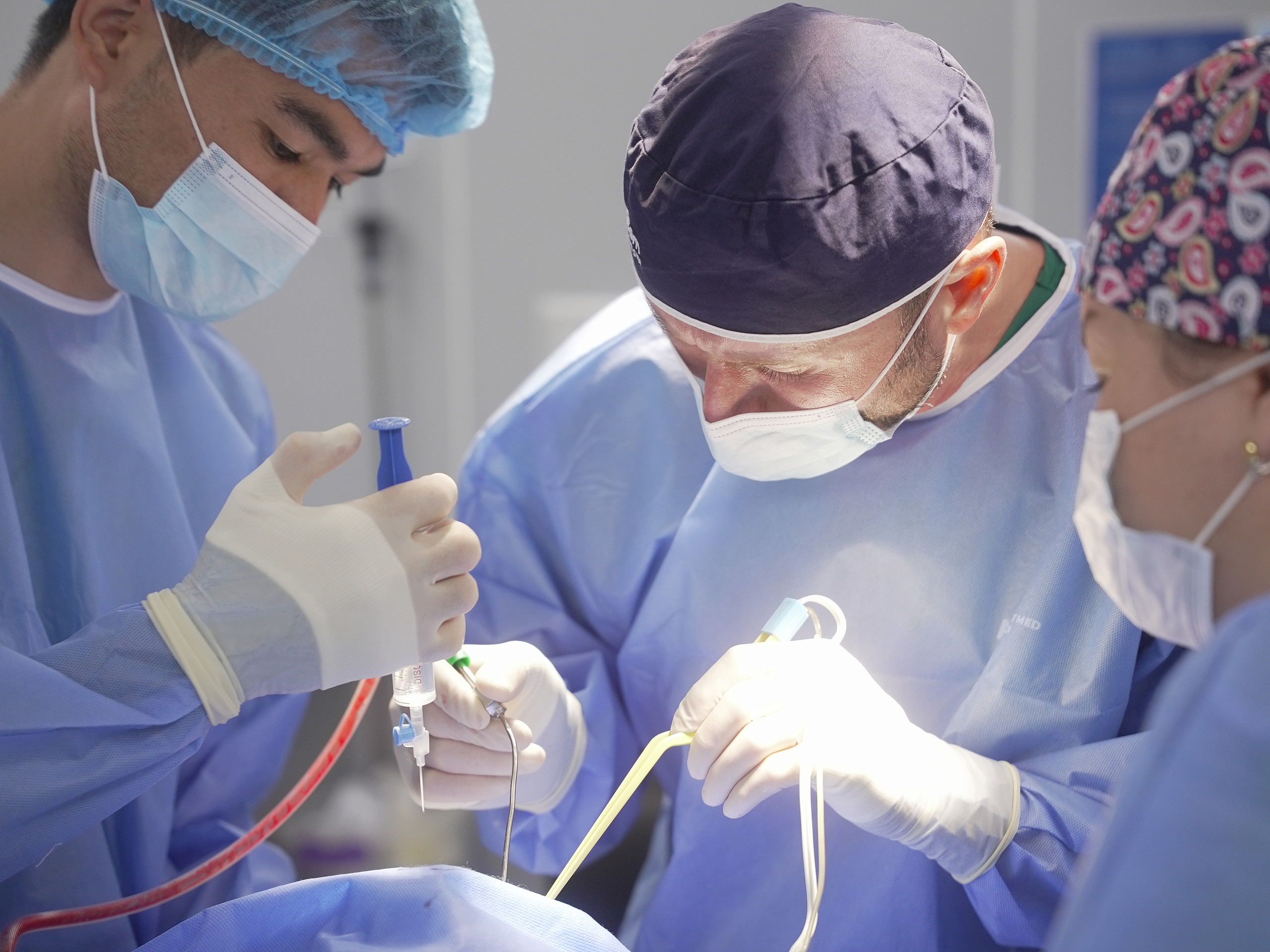
Technology used in the operating room
Precision is crucial in neurosurgery, especially in children.
The Center uses:
- an operating microscope
- endoscopic systems
- neuronavigation
- intraoperative neurophysiological monitoring
This makes it possible to perform complex procedures with the utmost care while monitoring brain function during surgery.
The post-operative period
After surgery, the child is not left "on their own".
Follow-up continues with:
- neurosurgeons
- rehabilitation specialists
- speech therapists and neuropsychologists if needed
The goal is not just to perform the operation successfully, but to help the child recover and keep developing.
Why it's important not to delay
In many neurosurgical conditions, timing directly affects the outcome.
Early diagnosis and timely treatment help to:
- reduce the risk of complications
- preserve function
- give the child more opportunities for normal development
Why parents come to the Children's National Medical Center
Parents need not just a place where operations are performed,
but a team that takes the child under its care and continues to support them.
At the Center:
- pediatric neurosurgeons with experience in complex cases
- treatment is organized as a single process — from diagnosis to recovery
- all key stages take place in one place
- the team stays in touch with the child and family and explains every step
This gives what matters most in such a situation —
an understanding of what is happening and confidence in every stage of treatment.
What parents should do
If you already have a diagnosis or a suspicion, it's best not to put off a consultation.
Even in complex cases, there are almost always treatment options.
What matters is discussing them in time and choosing the right approach.