
Cryptorchidism in boys: how to spot it and when treatment is needed
Cryptorchidism is a condition in which one or both testicles have not descended into the scrotum. Normally this happens before birth or in the first months of life.
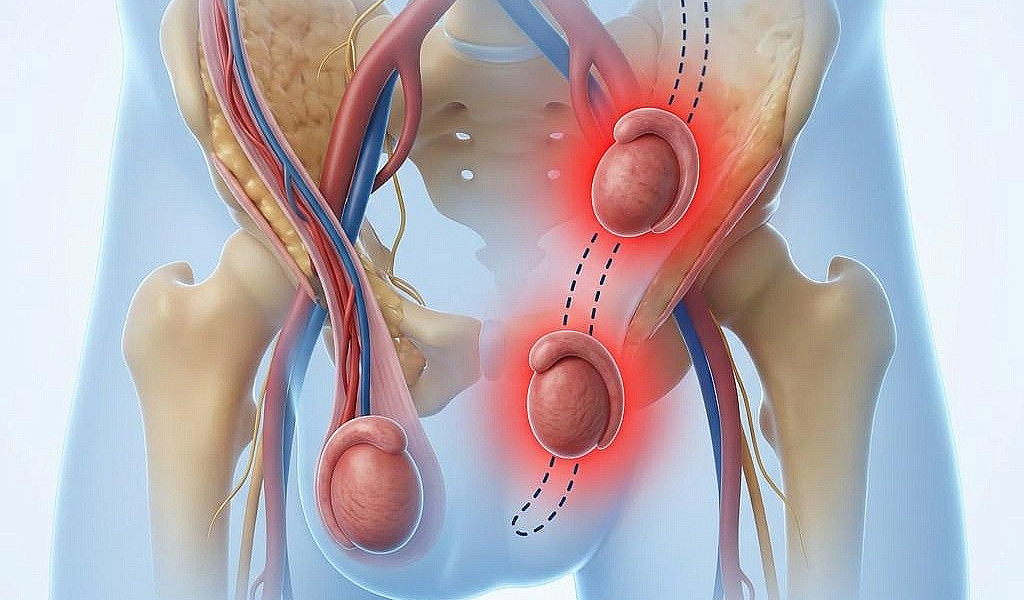
Sometimes parents think it "will still come down". This can indeed happen in the first months, but after a certain age, waiting is no longer advisable.
How to spot cryptorchidism
Most often it is noticed by the parents themselves or by a pediatrician during a check-up.
What to look out for:
- one or both testicles cannot be felt in the scrotum
- the scrotum looks "empty" or asymmetrical
- the testicle "comes and goes" (in this case it is important to distinguish it from a retractile testicle)
If in doubt, it's best to have your child seen by a pediatric urologist. It's a simple and quick check, but it allows a timely diagnosis.
Is it hereditary?
There is no clear "direct" inheritance. But the risk is known to be higher if:
- the father had cryptorchidism
- there are hormonal or genetic factors
- the child was born prematurely
Most often it is a combination of factors rather than a single cause.
Why it's important not to wait
After 6–12 months, the chance of the testicle descending on its own drops sharply.
If left as it is, there may be consequences:
- impaired testicular function
- reduced fertility in the future
- a higher risk of complications
That is why modern practice does not wait "until school age", but deals with the problem in good time.
When surgery is needed
The optimal age for surgery is roughly from 6 months to 1.5 years (depending on the situation).
It is during this period that:
- the tissues respond better to correction
- the risk of future complications is reduced
- the best functional result is achieved
The decision is made by the doctor after an examination and, if needed, further tests.
How the operation is performed
The operation is called orchiopexy — the testicle is carefully moved into the scrotum and fixed in the correct position.
Different methods are used depending on where the testicle is located:
- if the testicle is close by, a minimally invasive operation is performed through a small incision
- if it is higher up, a laparoscopic method may be used
The operation is performed under anesthesia and is usually well tolerated by children.
How we operate at our Center
At the Children's National Medical Center, cryptorchidism surgery is performed by pediatric urologic surgeons who regularly handle such cases.
We use modern approaches:
- minimally invasive techniques
- laparoscopy when needed
- precise anatomical correction that takes the child's future growth into account
All diagnostics are available at the Center, so we decide on the treatment quickly and don't lose time.
Our approach is not just to bring the testicle down, but to ensure its normal function and development in the future.
What parents should do
If you notice that a testicle is missing from the scrotum or you have doubts, don't put off a consultation.
Seeking help early means simpler treatment and a better result for your child.
At the bottom of the page you can choose a doctor, see their experience and book an appointment.