Epilepsy in children: causes, symptoms and modern treatment methods
When seizures are more than "just one episode"
Seizures in a child are always frightening.
Even a single episode makes parents worry and wonder: what was that?
Sometimes it really is a one-off reaction (for example, to a high fever).
But in some cases, such episodes may be a sign of epilepsy.
It's important not to guess, but to find out the cause.
What epilepsy is
Epilepsy is a disease of the nervous system that causes recurrent seizures.
They can look different:
- convulsions with loss of consciousness
- "freezing" for a few seconds
- twitching of individual parts of the body
- a sudden change in behavior
They are not always "classic" convulsions, which is why the condition can go unnoticed.
When to see a doctor
Be sure to take your child to a neurologist if:
- there has been at least one seizure
- your child periodically "switches off" or freezes
- unexplained twitching appears
- there is developmental delay alongside the seizures
- you notice a loss of skills
Even one episode is a reason for an examination.
How diagnosis works
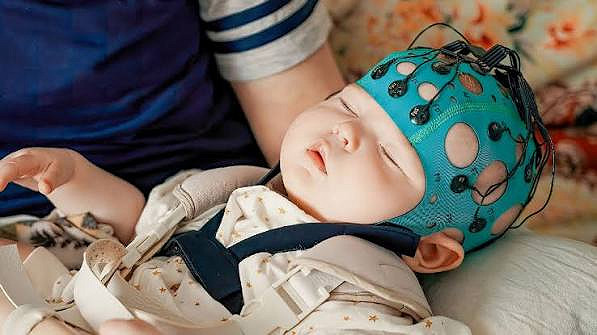
Modern diagnostics make it possible to determine the nature of seizures accurately.
The Pediatric Neurology Department uses:
- video-EEG monitoring (the key method)
- brain MRI
- genetic testing
- a comprehensive assessment of the child's development
This helps not only to confirm epilepsy, but to understand its cause.
Why it's important to find the cause
Epilepsy is not one disease, but a group of conditions.
The causes can vary:
- genetic factors
- structural changes in the brain
- consequences of injuries or infections
- autoimmune processes
And treatment depends on the cause.
Modern treatment of epilepsy in children
Today, treatment is based on the principles of evidence-based medicine and tailored to each child.
Antiepileptic therapy
Chosen based on the type of seizures and the child's individual features.
In most cases, the right treatment makes it possible to:
- fully control seizures
- significantly reduce their frequency
The ketogenic diet
Used for forms of epilepsy that do not respond to medication.
It is a medical diet that helps reduce seizure activity.
Neuromodulation
A modern treatment method, including:
- vagus nerve stimulation
Used in complex cases.
Surgical treatment
Considered when there is a focus that triggers seizures and can be removed.
What parents need to know
Epilepsy is not always a lifelong diagnosis.
In many cases:
- seizures are fully controlled
- the child lives a normal life
- develops and learns
The main thing is to make the right diagnosis and choose the right treatment.
An approach without guesswork or "experiments"
In the Pediatric Neurology Department, treatment is based on the principles of evidence-based medicine:
- only proven methods
- individually tailored therapy
- ongoing monitoring of effectiveness
- adjusting treatment when needed
We don't prescribe "just in case" and don't use methods without proven effectiveness.
When to book
If your child has had a seizure or something worries you, it's best to discuss it with a doctor.
Early diagnosis makes it possible to:
- bring the condition under control faster
- reduce risks
- preserve the child's quality of life