Pediatric ophthalmology from birth
Diagnosis and treatment of vision problems in newborns and children
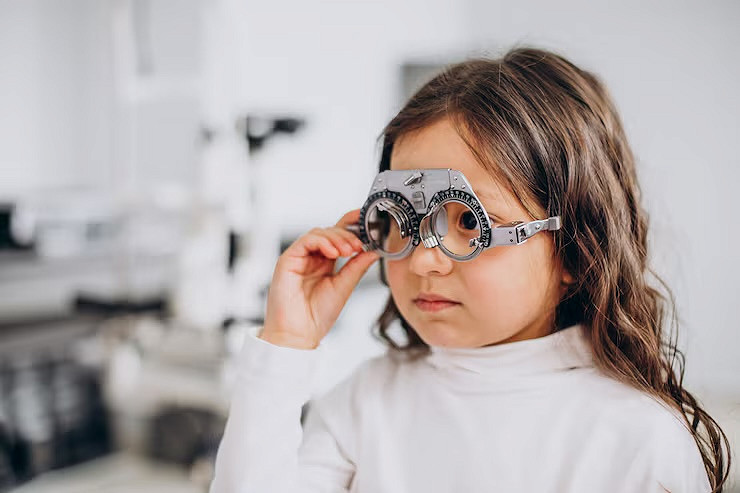
Vision develops from the very first days of life.
And it is during this period that it is especially important to notice any problems in time.
Parents start thinking about their child's eyesight when they notice something unusual.
The baby's eye waters, their gaze doesn't fix, one eye seems to "drift" to the side, or redness appears.
Sometimes it seems like a minor thing that will pass.
But vision problems can start with exactly these subtle changes.
When to take your child to an ophthalmologist
You should see a pediatric ophthalmologist if you notice:
- watery eyes or pus-like discharge
- red eyes
- your child doesn't fix their gaze
- an eye "drifts" to the side (suspected strabismus)
- light causes discomfort
- frequent blinking or squinting
Follow-up is especially important if the child was born prematurely.
Follow-up and treatment of premature babies
Premature babies are at risk of developing
retinopathy of prematurity — a condition that can affect vision.
At the Children's National Medical Center:
- retinopathy is diagnosed early
- modern equipment is used to examine the retina in newborns
- treatment starts right away, without losing time
- children are followed closely by specialists
This makes it possible to detect changes at early stages and make timely decisions.
Modern vision diagnostics for children
Diagnostics in pediatric ophthalmology are more than just "an eye test".
The Center provides a comprehensive examination:
- examination of the back of the eye
- assessment of the retina
- testing visual function appropriate to the child's age
- diagnosis of congenital and acquired conditions
All examinations are adapted for children, including newborns.
Surgery for the youngest patients
Some diseases require not only monitoring but also surgery.
The Center performs operations:
- on newborns and young children
- for congenital eye conditions
- for retinopathy of prematurity
- for complex diseases of the retina and other structures of the eye
Such procedures require:
- great precision
- specialized equipment
- experience working specifically with children
That is why it is important for diagnosis and treatment to be in one place.
Why this matters
In children, many eye diseases develop quickly.
But when detected early, they can be controlled or fully corrected.
Why parents choose the Children's National Medical Center
- diagnosis and treatment of children from birth
- experience working with premature babies
- modern equipment for pediatric ophthalmology
- surgical treatment for complex cases
- a team approach and ongoing follow-up
For parents, this means one thing:
the child receives care at every stage — from the first examination to treatment and follow-up.
What parents should do
If you have any doubts, it's best to have your child seen by a specialist.
Even if everything turns out to be normal, you'll have peace of mind.
And if there is a problem, you won't lose time, which is truly critical in pediatric ophthalmology.